A running toilet is usually a ten-minute fix, and it is usually one of three parts: the flapper, the fill valve, or the float. This guide walks through the checks in order. If you are not comfortable working inside the cistern, or if the toilet is leaking at the base, call a plumber instead.
First: find the cause
Take the lid off the cistern and watch. If water is running into the overflow tube, the water level is too high and the fill valve or float needs adjusting. If the water level is normal but the toilet runs in short bursts, the flapper is probably letting water leak into the bowl. Put a few drops of food colouring in the cistern and wait 15 minutes without flushing: colour in the bowl means the flapper is leaking.
Adjust the float
The float sets the water level. On a ball float, bend the arm down slightly so the water shuts off lower. On a cup float that slides on the fill valve, squeeze the clip and slide the cup down. The water level should sit about an inch below the top of the overflow tube. Flush and watch it refill to the new level.
Check the flapper
When the flapper will not seal
The flapper is the rubber disc at the bottom of the cistern. If it is warped, blistered or stiff, it will not seal. Turn off the water at the shutoff behind the toilet, flush to empty the cistern, unhook the old flapper and fit a new one of the same size, making sure the chain has a little slack: too tight and the flapper cannot close, too loose and it will not lift fully.
Check the fill valve
Sediment, wear — or replacement
If the fill valve hisses, fills slowly, or will not shut off, it may be clogged with sediment or worn out. Denver's water is soft to moderately hard, and the scale it leaves behind shortens the life of fill valves. Cleaning the valve cap sometimes helps; if it does not, the valve needs replacing. Turn the water off first, and be careful with the supply line: on older Denver homes the shutoff and the supply line can be brittle.
When to call a plumber
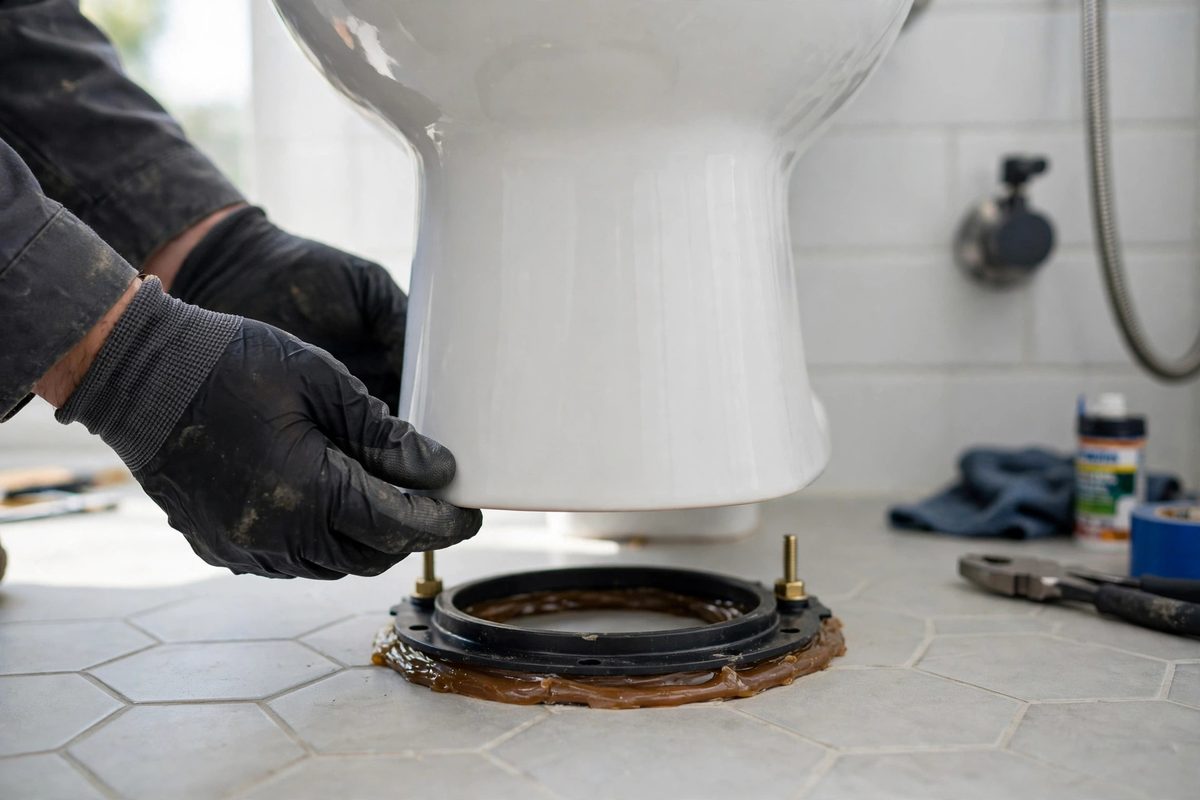
Call if the toilet leaks at the base, rocks on the floor, or the shutoff valve will not turn or starts leaking when you touch it. A leaking base usually means a failed wax ring, and a rocking toilet means the flange underneath needs attention. See toilet repair and toilet installation. For the full picture on running toilets, see why your toilet runs constantly.