Water Softener Repair in Denver, CO
A softener that leaves the water hard again, regenerates constantly, or leaks at the brine line usually has a specific cause: a salt bridge, a failed valve, or resin that has reached the end of its life. We find it and fix what actually failed.
Service overview
Salt bridge, valve, or resin: find the fault
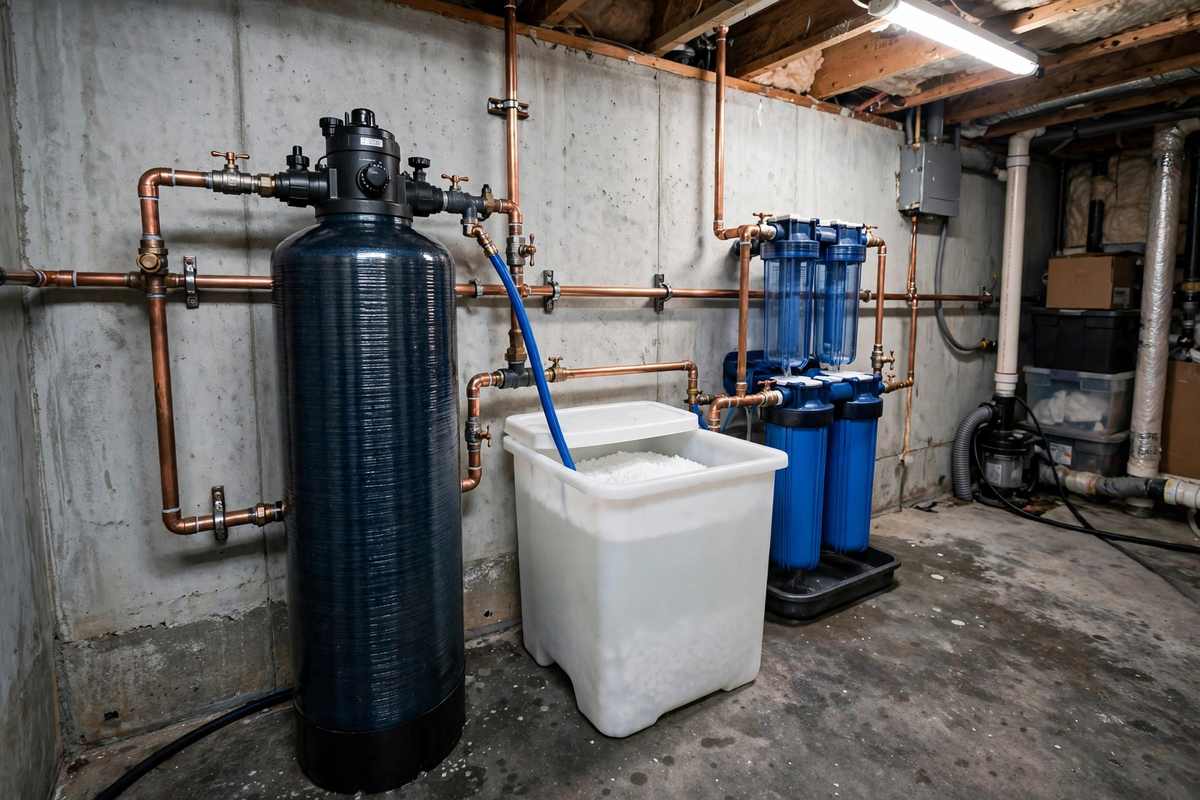
Water softener repair in Denver is the diagnosis and fix of a softener that has stopped softening, started regenerating constantly, or begun leaking. The most common cause is a salt bridge: a hard crust forms in the brine tank, the salt below it cannot dissolve, and the unit regenerates with plain water. A failed control valve or a clogged injector can stop regeneration altogether, and resin that has been in service for years can lose its capacity to exchange hardness. Denver Water reports hardness of about 89–105 mg/L (5.2–6.1 gpg), so a softener that is not working shows up as spots on fixtures and scale returning to the water heater. We test the water, check the brine tank, and test the valve in turn.
! Common warning signs
Water is hard again
Spots on fixtures and scale returning are the signs. A salt bridge, a failed valve, or exhausted resin can all leave the water hard.
Regenerates constantly or not at all
A unit that regenerates constantly may have a valve or timer fault. One that never regenerates may have a clogged injector or a failed control.
Leaks at the brine line or drain
A leak at the brine line or the drain connection points to a failed seal or a loose fitting, and the source decides the fix.
Scope of work
What a water softener repair visit covers
A softener repair starts at the brine tank: we check the salt, the valve and the resin bed to find whether the water is hard again because of a setting, a blockage or a failed part. Here is what the visit covers.
-
01
Water testing
We test the water before and after the unit so the fault is confirmed by the water itself, not by a guess.
-
02
Brine tank inspection
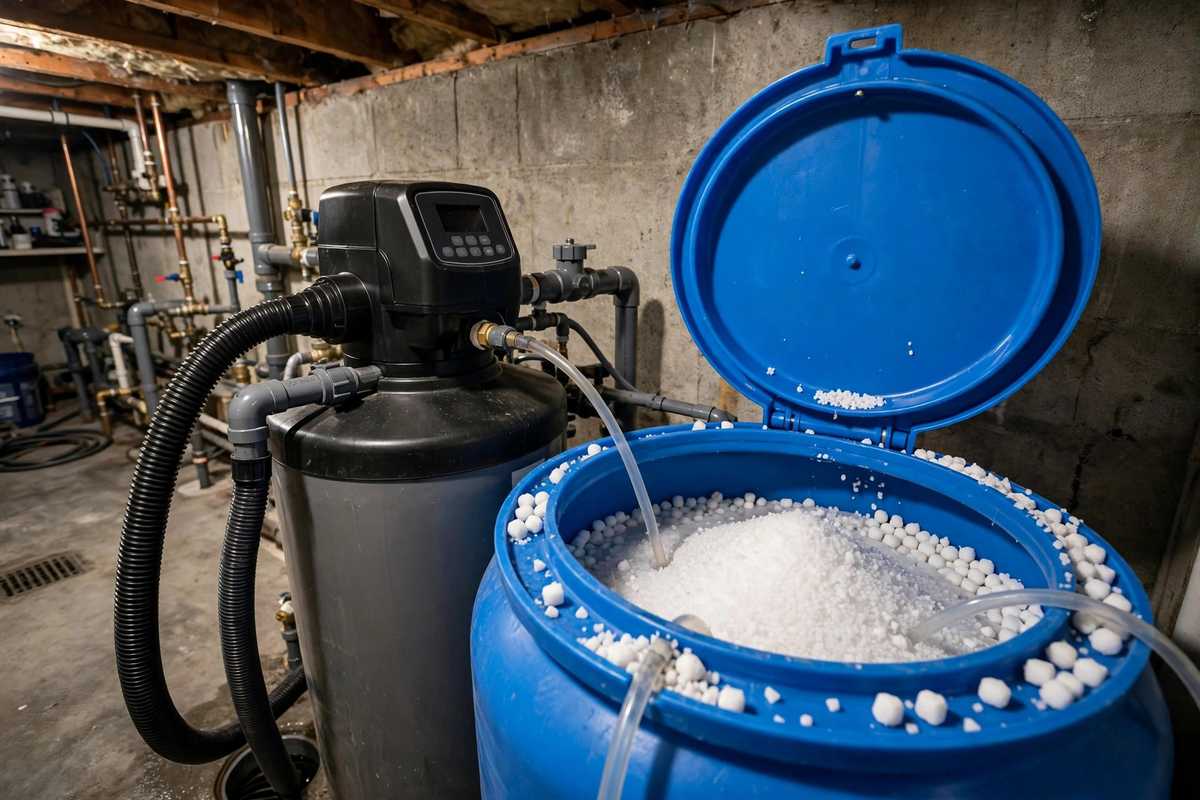
The brine tank is checked for a salt bridge, a clogged float, and salt that has hardened into a crust the unit cannot dissolve.
-
03
Valve and injector testing
The control valve, the injector, and the timer are tested so a regeneration fault is fixed at the part that failed.
-
04
Resin and drain check
The resin bed and the drain line are checked, since exhausted resin and a blocked drain each leave the water hard in different ways.
Repair or replace: how the call is made
A softener with a salt bridge, a failed valve, or a clogged injector is worth repairing, and most are. A softener with exhausted resin and a control that has failed with it is a different conversation, and we lay out the replacement option when the diagnosis points that way.
Call (720) 599-7253Tools and methods we use
Water hardness testing
Tests the water before and after the unit so the repair is confirmed by the water itself.
Brine tank tools
Breaks up a salt bridge and checks the float and the brine line so the unit can draw brine again.
Valve and injector testing
Tests the control valve, the injector, and the timer so a regeneration fault is fixed at the part that failed.
Drain testing
Checks the drain line for blockages so regeneration water leaves the unit properly.
Local execution
Softener repair in Denver comes up most where softeners have been running for years without service. In Green Valley Ranch and Montbello, newer homes with larger softeners see salt bridges when the brine tank is filled too high or the salt is left to harden. In Park Hill and Washington Park, older units in utility rooms often have resin that has been in service for a decade or more, and the water goes hard again gradually enough that the household only notices when the spots return. Denver Water reports hardness of about 89–105 mg/L (5.2–6.1 gpg), so a softener that is not working shows up in the water.
Where softener repair comes up most in Denver
What to tell us when you call
Softener not softening? Call to book a repair visit
What to do while you wait
A softener that has stopped working will not damage the house, but Denver's soft to moderately hard water will start leaving scale again. Call (720) 599-7253, describe the softener and the water, and we will confirm availability when you call. Do not add more salt to a brine tank that already has a crust in it; leave the tank as it is until we have seen it.
What to expect from your softener repair
Call and describe the fault
Call (720) 599-7253 and tell us what the water does and how old the softener is. We set a time that fits your day.
On-site diagnosis
We test the water, inspect the brine tank for a salt bridge, and test the valve and injector so the fault is found before any part is replaced.
Repair and testing
The salt bridge is cleared or the failed part is replaced, and the water is tested again to confirm the softener is producing soft water.
What shapes the cost of water softener repair in Denver
We do not publish prices for water softener repair: a brine fault, a valve fault and a resin problem are three different jobs. We talk through what the repair involves before any work starts, and agree the scope with you before any work starts.
The fault itself
A salt bridge and a failed control valve are different repairs, and exhausted resin is different again. The diagnosis sets the scope.
Unit age and condition
A recent unit with one failed part is a straightforward repair. An older unit with exhausted resin and a failed control may not be worth repairing.
Access to the unit
Access shapes the visit: a softener out in the open is reached straight away, while one packed into a tight closet has to be worked around first.
Before any work starts
Frequently asked questions
Why is my water hard again after years of soft water?
A salt bridge in the brine tank, a failed control valve, or resin that has lost its capacity can all leave the water hard. We test the water and check the brine tank to find which one it is.
What is a salt bridge?
A hard crust that forms in the brine tank, so the salt below it cannot dissolve and the unit regenerates with plain water. Breaking up the crust and checking the float usually restores the softener.
How do I know if my softener resin is exhausted?
The water goes hard again gradually, and spots and scale return even though the unit runs. Testing the water before and after the unit tells us whether the resin is still exchanging hardness.
Should I repair or replace my water softener?
A softener with a salt bridge, a failed valve, or a clogged injector is worth repairing. A softener with exhausted resin and a failed control is a different conversation. We lay out both options when the diagnosis points that way.
Related services
Softener not working in Denver? Call us
Call (720) 599-7253 and tell us what your water does. We will confirm availability and find the fault.