
Faucet Installation in Denver, CO
A new faucet has to fit the sink, the hole spacing, and the supply lines underneath, and it has to be set so it works smoothly for years. We fit the fixture to the sink you have, not the other way around.
Service overview
Fit, supply, and shutoffs before the faucet goes in
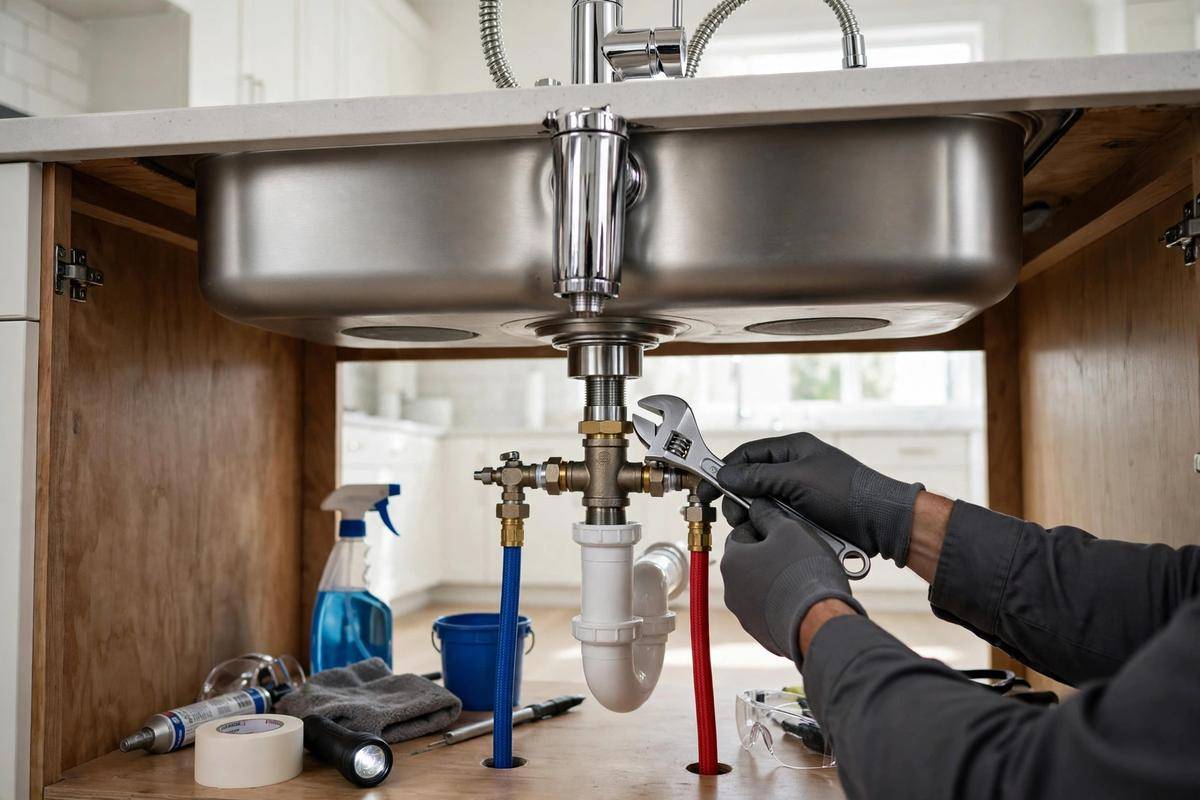
Faucet installation in Denver means fitting a new kitchen, bathroom, or utility faucet, and the work starts with the sink it has to fit. Hole spacing, the number of holes, and the deck thickness decide which faucets will work, and a faucet bought without checking those measurements often does not fit at all. The supply lines and the shutoff valves underneath matter just as much: older homes often have original brass shutoffs that have seized, or supply lines that are brittle and due for replacement at the same time. We check the sink, the supplies, and the shutoffs before the new faucet goes in, so the install does not stall halfway through.
! Common warning signs
Will it fit this sink
Hole spacing, hole count, and deck thickness decide which faucets work. We measure before the faucet is chosen, not after it is bought.
Kitchen, bath, or utility
A kitchen faucet, a bathroom faucet, and a utility faucet are different fixtures with different mounts, spouts, and supply needs, and each is fitted differently.
What is underneath
Under the sink in an older Denver home, the shutoffs are often original brass that has seized and the supply lines are often brittle. Both need attention before a new faucet can be connected properly.
Scope of work
What a faucet installation includes
A faucet installation runs in a set order: measure the sink, check the supplies and the shutoffs, fit the faucet, then test every connection. Here is what it covers.
-
01
Measuring and selection
We measure the hole spacing, hole count, and deck thickness, and confirm the faucet you have chosen fits the sink before any work starts.
-
02
Supply and shutoff check
The supply lines and angle stops under the sink are checked. Seized valves and brittle lines are replaced so the new faucet has sound connections.
-
03
Removal and fitting
The old faucet is removed, the deck is cleaned, and the new faucet is set with its gasket and mounting hardware, then connected to the supplies.
-
04
Testing and adjustment
We run hot and cold through the faucet, check every connection for leaks, and set the handle travel so the faucet shuts off cleanly and works smoothly.
What we check underneath before we start
The faucet you see is only half the job. Under the sink, older Denver homes often have galvanized or copper supplies, original brass shutoffs that have not moved in decades, and traps that are due for attention. We check those before the install so a seized valve does not turn a faucet swap into a bigger job.
Call (720) 599-7253Tools and methods we use
Basin wrench
Reaches the mounting nuts under the sink where a standard wrench cannot fit, so the new faucet can be set without taking the sink out.
Hole and deck gauges
Confirms hole spacing, hole count, and deck thickness so the faucet chosen actually fits the sink it is going on.
Supply line and shutoff tools
Replaces seized angle stops and brittle supply lines so the new faucet has sound, working connections.
Leak testing
Checks every connection under the sink after the install, hot and cold, so no joint is left untested.
Local execution
The city's housing mix decides how a faucet install goes. Remodelled kitchens in Cherry Creek and Washington Park often have stone counters with specific hole layouts, so the faucet has to match the counter, not the other way around. Older bungalows in Highland and Berkeley still have original sinks, and the hole spacing on a 1920s sink does not always match a modern faucet — so we measure before anything is ordered. Denver Water reports hardness of about 89–105 mg/L (5.2–6.1 gpg), which is why we also talk about aerators and finishes that stand up to mineral deposits.
What Denver sinks ask of a new faucet
What to tell us when you call
New faucet to fit? Call to discuss it
What to do while you plan
Measure the sink before buying the faucet: hole spacing, hole count and deck thickness decide which faucets fit, and a faucet bought without those numbers often does not fit at all. Call (720) 599-7253, describe the faucet and the sink, and we will confirm availability when you call. If the old faucet is leaking at the base or under the sink, shut off the angle stops under the sink and place a bucket beneath the trap.
What to expect from your faucet installation
Call and describe the job
Call (720) 599-7253 with the faucet chosen and the sink described: hole spacing, deck thickness and whether the shutoffs underneath work are what we need to set a time that fits your day.
Measuring and supply check
We measure the hole spacing and deck thickness, confirm the faucet fits, and check the supply lines and shutoffs under the sink before any work starts.
Fitting and testing
The old faucet is removed, the new one is set and connected, and every joint is tested hot and cold so the faucet shuts off cleanly and works smoothly.
What shapes the cost of faucet installation in Denver
The price of a faucet installation depends on the fixture, the sink and the state of the supplies underneath it, so no price is published on this site. Before any work starts, we talk through what the install involves so you can decide with the facts in front of you.
Fixture and mount type
A single-hole faucet and a widespread faucet are different installs, and a kitchen faucet with a pull-down sprayer is different again. The fixture sets much of the scope.
Sink and counter
Each sink brings its own fitting questions — stone counters, thick decks, older sinks with non-standard hole spacing — and the sink, not the faucet, decides the work.
Supply and shutoff condition
Working shutoffs and sound supply lines keep the job simple. Seized valves and brittle lines add work that has to be done before the faucet can be connected.
Before any work starts
Frequently asked questions
Will any faucet fit my sink?
Not necessarily. Hole spacing, hole count, and deck thickness decide which faucets work, and a faucet bought without measuring often does not fit. We measure before the faucet is chosen, not after it is bought.
Do my shutoff valves need replacing with the faucet?
Often, yes, in older homes. A faucet swap disturbs the angle stops and supply lines under the sink, and original brass shutoffs that have not moved in decades can seize when they are touched. We check them before the install and replace them when they are not sound.
Can you install a faucet I bought myself?
Yes — bring the faucet and its mounting hardware. We measure the sink and check the supplies first, and if the faucet does not fit we say so before any work starts, not after the old one is out.
Does a new faucet need a permit in Denver?
Swapping a faucet for one that fits the same holes is generally exempt from a permit under the Denver Building Code. Moving the supply lines or reworking the layout can trigger one, and we will tell you if the job you have in mind crosses that line.
Further reading: How to replace a bathroom faucet, step by step.
Related services
New faucet for your Denver home? Call us
Call (720) 599-7253 about the faucet and the sink, and we will check the fit before quoting anything.