
Water Heater Installation in Denver, CO
A new tank is a sizing decision, a permit, and a day of careful pipework, not just a swap. We size the unit to the household, handle the Denver permit and inspection, and set the system up so it runs the way it should from the first shower.
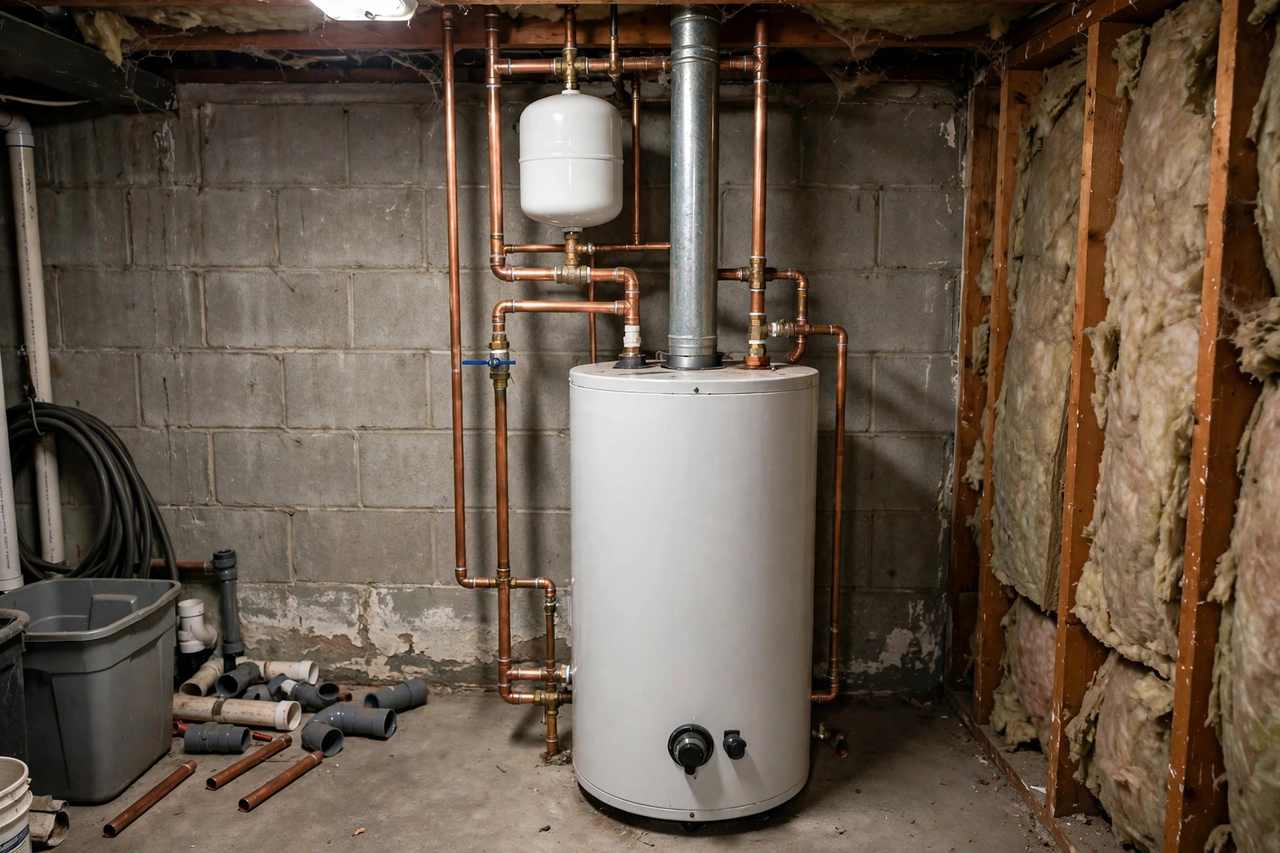
Service overview
Sizing, permits, and a clean install
Water heater installation in Denver means replacing a failed tank or fitting a first tank in a home that needs one, and the work starts before any pipe is cut. We size the tank to the household: the number of bathrooms, how many people shower in the morning, and whether there is a large tub or a laundry load running at the same time. An undersized tank leaves the last shower cold, and an oversized one costs more to run than it needs to. Denver requires a permit and inspection for water heater replacement, and closed systems need an expansion tank, so those steps are part of the job, not an afterthought. Denver Water reports hardness of about 89–105 mg/L (5.2–6.1 gpg), which is why we talk about anode rods and flushing at install time rather than after scale has already taken hold.
! Common warning signs
How many people use hot water
A household of two and a household of six need different tanks. We ask about bathrooms, tubs, and morning routines before recommending a size.
Gas or electric, and what is already there
The fuel type, the venting, and the existing gas line or electrical circuit decide what can be installed without extra work, and what cannot.
Where the tank will sit
Basement, closet, garage, or utility room each bring their own access, venting, and drain questions, and the location shapes the install from the start.
Scope of work
What a water heater installation includes
An installation is a planned job with a permit, a sizing step, and a full test at the end. Here is what it covers.
-
01
Sizing and selection
We work out the tank size from the household's hot-water use, check the fuel type and venting, and confirm the space, drain, and clearances where the unit will sit.
-
02
Permit and inspection
Denver requires a permit and inspection for water heater replacement. We can handle the permit step and arrange the inspection as part of the job — confirm it is included when you book.
-
03
Removal and install
The old unit is drained, disconnected, and hauled away. The new tank is set, connected to water, gas or power, and venting, with an expansion tank fitted on closed systems.
-
04
Testing and walkthrough
We fill and purge the tank, test the gas connections and relief valve, run the unit through a full heating cycle, and show you the shutoffs and the thermostat setting.
Code corrections we flag at install time
Older installs often come with problems that only show up when the tank is out: a missing expansion tank on a closed system, a relief valve draining where it should not, or venting that no longer meets code. We point these out and correct them as part of the install rather than leaving them for the next failure.
Call (720) 599-7253Tools and methods we use
Pipe wrench and torch
Makes sound copper joints on supply lines and relief valve connections, and loosens fittings that have not moved in years.
Gas leak detection solution
Checks every gas joint after the install so no connection is left untested before the unit is fired.
Multimeter
Confirms the electrical supply on electric units and checks thermostat and element operation before the tank is filled and fired.
Level and measuring tools
Sets the tank plumb and confirms clearances, venting runs, and drain routing are right before the unit is connected.
Local execution
Most Denver tanks sit in basements, and the basement is where the install's real constraints show up: headroom, a floor drain that may or may not exist, and a venting route through older masonry. In Baker and Congress Park, 1920s and 1930s homes often have the original galvanized or copper supply lines feeding the heater, and we check whether those lines can support the new unit before we start. In Washington Park and Montclair, remodelled basements with finished walls mean the venting and drain routes need planning around finished space. Denver's cold snaps also drop inlet temperatures, so sizing has to hold up in January, not just in July.
What Denver homes ask of a new tank
What to tell us when you call
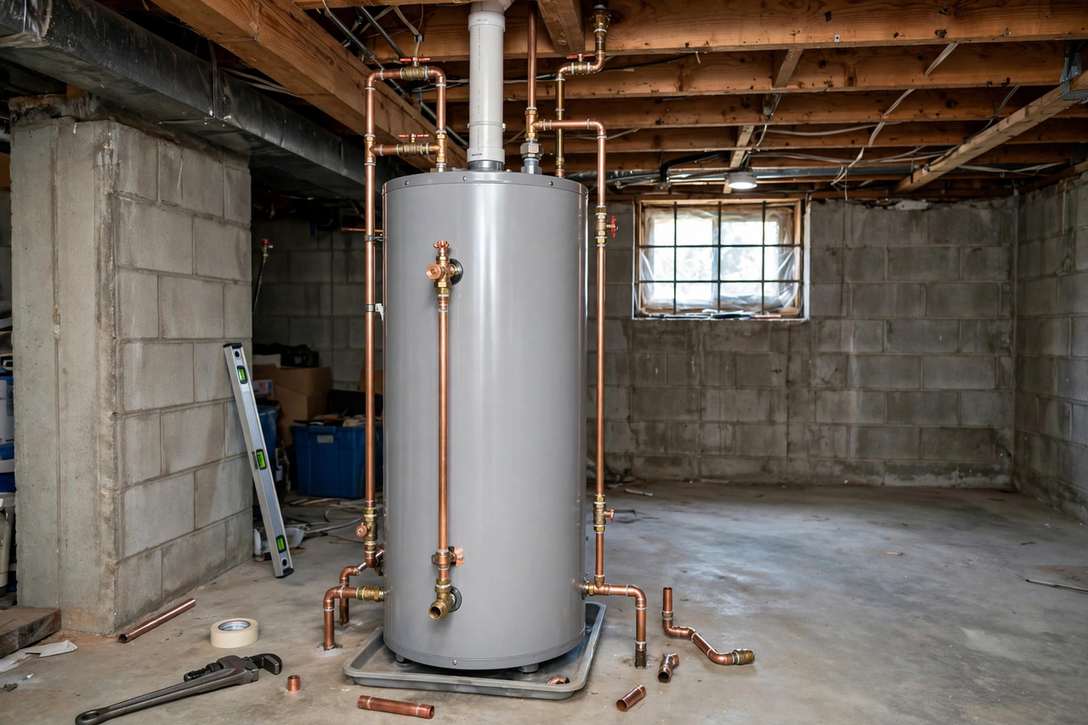
Planning a new water heater? Call to discuss it
What to do while you plan
A tank replacement goes smoother with the details in hand: the current unit's size and fuel, the household's hot-water use, and where the unit sits. Call (720) 599-7253 and describe the current unit and the household, and we will confirm availability when you call. If the old tank is leaking, shut off the cold-water supply valve above it and, for a gas unit, turn the gas control to off; for an electric unit, switch off the breaker.
What to expect from your installation
Call and describe the job
Call (720) 599-7253 and tell us about the current unit, the household, and the space it sits in. We ask about bathrooms, fuel type, and access so the sizing starts from facts.
Sizing and selection
We work out the tank size from hot-water use, confirm the fuel, venting, and drain routes, and talk through the permit and inspection steps Denver requires.
Installation and testing
The old unit is removed, the new tank is set and connected with an expansion tank on closed systems, and the unit is run through a full heating cycle before we leave.
What shapes the cost of water heater installation in Denver
A water heater installation has no published price: the unit, the site and the code work involved set the scope. We talk through what the install involves before any work starts, and agree the scope with you before any work starts.
Tank size and fuel type
A larger tank and a gas unit with venting work are different jobs from a like-for-like electric swap. Size and fuel set much of the scope.
Site and access
A tank in an open basement is simpler to install than one in a tight closet or a finished room, and the venting and drain routes matter as much as the tank itself.
Permit and code corrections
Denver requires a permit and inspection for replacement, and older installs often need an expansion tank or a relief-valve correction. Those steps are part of the job.
Before any work starts
Frequently asked questions
Do I need a permit to replace a water heater in Denver?
Yes. Denver requires a permit and inspection for water heater replacement, and an expansion tank is required on closed systems. We can handle the permit step and arrange the inspection as part of the installation — confirm it is included when you book.
What size water heater does my Denver home need?
It depends on the household: the number of bathrooms, how many people shower in the morning, and whether there is a large tub. We size from hot-water use rather than from the old tank's label, because the old tank may have been wrong from the start.
Should I switch from a tank to a tankless unit?
A tankless unit is a different decision from a like-for-like tank swap: it needs sizing for Denver's cold inlet water, and often gas-line and venting work. Our tankless installation page covers what that conversion involves.
Does hard Denver water affect a new water heater?
Yes. Denver Water reports hardness of about 89–105 mg/L (5.2–6.1 gpg), and scale builds on elements and burner surfaces over time. We talk about anode rods and flushing at install time so the new unit starts clean.
Further reading: Why is my water heater leaking from the bottom and Water heater repair or replacement: which is right for you.
Related services
Tankless Water Heater Installation
If you are weighing a tank against a tankless unit, the tankless page covers sizing for Denver's cold inlet water, venting, and gas-line work.
Water Heater Repair
If the current tank still heats but has a fault, repair may be the better call. The repair page covers diagnosis and the repair-or-replace decision.
Need a new water heater in Denver? Call us
Call (720) 599-7253 and tell us about your current unit and your household. We will confirm availability, size the replacement, and talk through the permit and inspection steps.