Water Softener Installation in Denver, CO
A softener has to be sized to your water and your household, set up with a proper drain and brine line, and understood for what it does: it removes hardness. It does not filter taste or chlorine, and that distinction matters before you buy.
Service overview
Sizing, setup, and what softening actually does
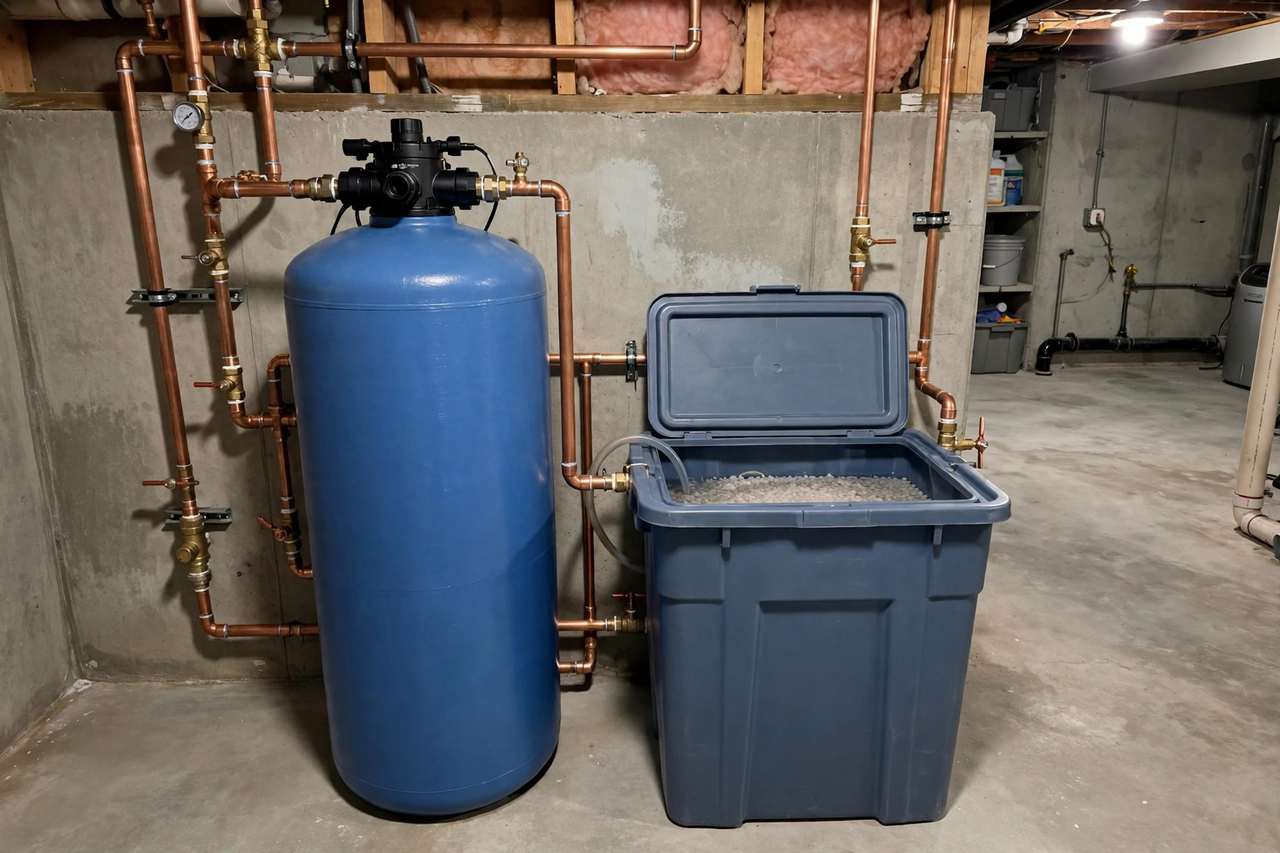
Water softener installation in Denver means fitting a system that removes hardness from the household water supply, and the work starts with the water itself. Denver Water reports hardness of about 89–105 mg/L (5.2–6.1 gpg), which is soft to moderately hard, and that range is why a softener is sized from a water test rather than from a single figure. A salt-based ion exchange softener swaps calcium and magnesium for sodium and produces genuinely soft water. A salt-free conditioner is a different product: it does not remove hardness and does not produce soft water, and we say so plainly before anything is fitted. The softener needs a drain for regeneration, a brine line, and a location with power and access for salt, and those decide where it can go.
! Common warning signs
How hard is your water
Denver Water reports about 89–105 mg/L (5.2–6.1 gpg), a range, not a single figure. We size from a water test so the softener matches your supply.
Salt-based or salt-free
A salt-based ion exchange softener removes hardness and produces soft water. A salt-free conditioner does not. The difference decides what you actually get.
Where the softener will sit
The unit needs a drain, a brine line, power, and access for salt. The location shapes the install from the start.
Scope of work
What a water softener installation includes
A softener installation is a planned job with a water test, a sizing step, and a full test at the end. Here is what it covers.
-
01
Water testing and sizing
We test the water hardness and size the softener from the household's water use, so the unit regenerates at the right interval and the water is genuinely soft.
-
02
Location and plumbing
The softener is plumbed into the main supply, with a bypass valve, a drain for regeneration, and a brine line, in a location with power and salt access.
-
03
Setup and programming
The unit is programmed to the water test and the household's use, and the regeneration cycle is set so the softener runs when it should.
-
04
Testing and walkthrough
We test the softened water, check every connection for leaks, and show you how to add salt and what the regeneration cycle looks like.
Softening is not filtering, and we say so
A softener removes hardness. It does not remove chlorine, improve taste, or take out sediment, and a household that wants those things needs filtration, which is a different system. We say this before the install, because a softener bought to fix taste is the wrong purchase, and a filter bought to fix hardness is too.
Call (720) 599-7253Tools and methods we use
Water hardness testing
Tests the supply so the softener is sized from your water rather than from a single published figure.
Bypass and drain fitting
Plumbs the unit with a bypass valve and a proper drain for regeneration, so the softener can be serviced without shutting off the house.
Brine line setup
Sets the brine line and the salt tank so regeneration works as designed and the unit does not run dry.
Softened water testing
Confirms the water leaving the unit is soft, so the install is verified rather than assumed.
Local execution
Softener installs in Denver follow the water supply, which is soft to moderately hard across the city. In Green Valley Ranch and Montbello, newer homes with larger households and more bathrooms need larger units, and the softener often goes in with the water heater in the utility area. In Gateway and Park Hill, the question is often where the unit can go: a drain, power, and salt access are all needed, and older homes do not always have them in the same place. No major metro utility softens water at the plant, so conditioning is the homeowner's job, and the softener is sized to the household, not the neighbourhood.
What Denver water asks of a softener
What to tell us when you call
Thinking about a water softener? Call to discuss it
What to do while you plan
A softener installation is a planned job, and the water test and sizing steps are easier when they are not rushed. Call (720) 599-7253, describe the water and the household, and we will confirm availability when you call. If you are also weighing filtration, tell us, because softening and filtering are different systems and the right answer depends on what you want the water to do.
What to expect from your softener installation
Call and describe the water
Call (720) 599-7253 and tell us how the water behaves, how many people use it, and where the unit could sit. We set a time that fits your day.
Testing and sizing
We test the water hardness, size the unit from the household's use, and confirm the location has a drain, power, and salt access.
Installation and testing
The unit is plumbed in with a bypass and a drain, programmed to the water test, and the softened water is tested before we leave.
What shapes the cost of water softener installation in Denver
A softener installation has no published price: the unit, the household and the plumbing at the site set the scope. Call and describe the household, and we will talk through what decides the price before agreeing to anything.
Unit size and type
A unit sized for a large household is a different job from one sized for a small one, and a salt-based softener is a different system from a salt-free conditioner.
Location and plumbing
A utility area with a drain and power nearby is simpler to fit than a location that needs new plumbing run to it, and the site decides the work.
Drain and brine setup
The drain for regeneration and the brine line have to be run properly, and the route they take shapes the scope of the job.
Before any work starts
Frequently asked questions
How hard is Denver water?
Denver Water reports hardness of about 89–105 mg/L (5.2–6.1 gpg), a range, not a single figure. Other Front Range guides quote wider ranges for municipal systems generally. We size a softener from a water test of your supply, not from a single published number.
Will a water softener improve the taste of my water?
Not on its own. A softener removes hardness; it does not remove chlorine, improve taste, or take out sediment. If taste is the concern, filtration is the system to look at, and our filtration page covers it.
What is the difference between a softener and a salt-free conditioner?
A salt-based ion exchange softener removes hardness and produces genuinely soft water. A salt-free conditioner does not remove hardness and does not produce soft water. They are different products, and we say so before anything is fitted.
Does a new softener need a permit in Denver?
A softener fitted to the household supply with no change to the main layout is generally exempt from a permit under the Denver Building Code. If the job reworks the main supply, a permit can apply — and we will tell you if yours crosses that line.
Related services
Water Filtration System Installation
If taste, odour, or chlorine is the concern, the filtration page covers whole-house carbon and point-of-use reverse osmosis.
Water Softener Repair
If you already have a softener that is not working, the repair page covers salt bridges, resin, and regeneration faults.
Hard water in your Denver home? Call us
Call (720) 599-7253 and tell us how your water behaves. We will confirm availability and talk through testing and sizing for your household.