
Tankless Water Heater Installation in Denver, CO
A tankless unit is a conversion, not a swap. It has to be sized for Denver's cold inlet water, fed with enough gas, vented correctly, and set up for the descaling that hard water makes necessary.
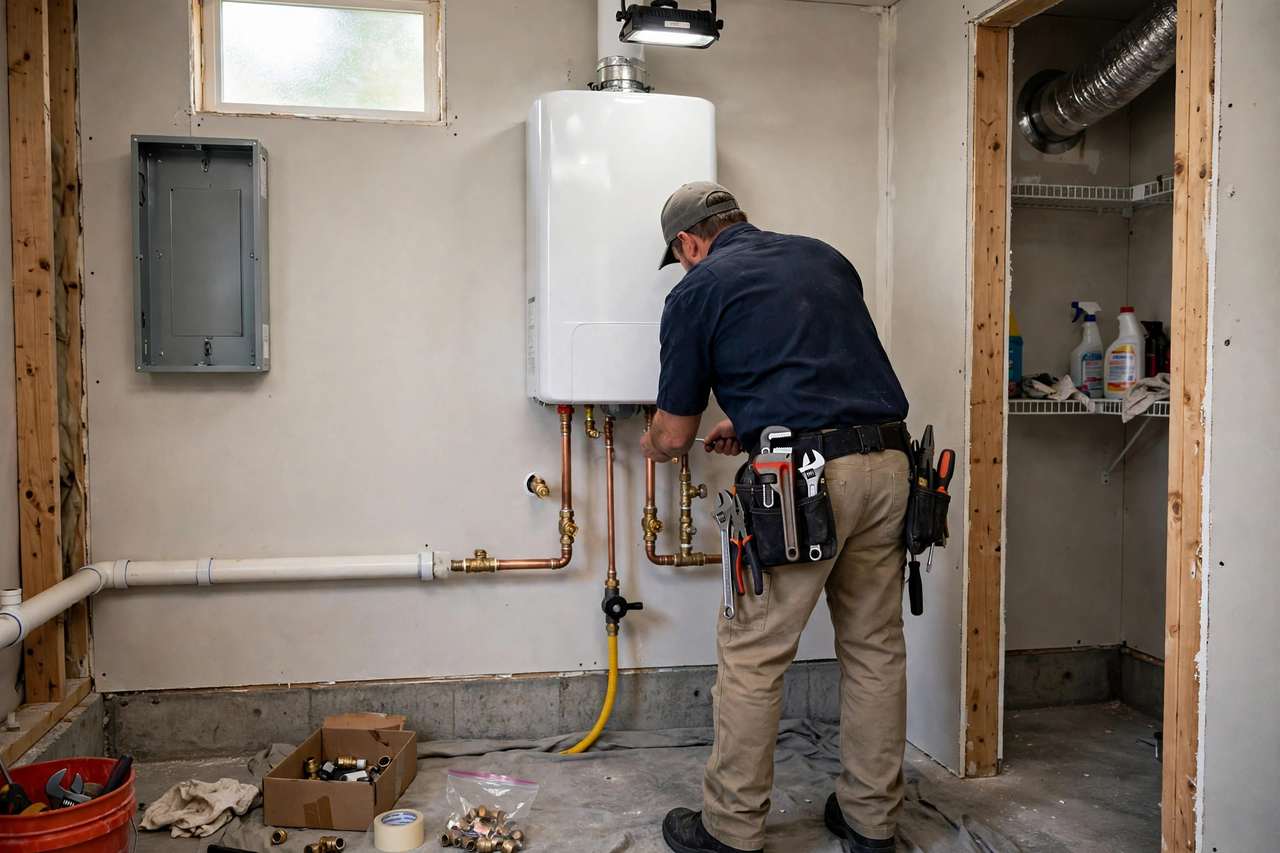
Service overview
A conversion decision, sized for Denver water
Tankless water heater installation in Denver means replacing a tank with a unit that heats water as it flows, and the sizing question is different from a tank swap. In January, Denver's inlet water runs around 43°F, so the unit has to lift cold water a long way to reach a comfortable shower temperature, and that lift decides the size. A unit sized for a warm-climate inlet will leave the second shower cold. Gas-fired units often need a larger gas line, and the venting, condensate drain, and freeze protection all have to be planned for the specific site. Denver Water reports hardness of about 89–105 mg/L (5.2–6.1 gpg), and scale is the main enemy of a tankless heat exchanger, so descaling access is part of a good install, not an afterthought.
! Problems we solve
How much hot water, at once
One shower and a dishwasher at the same time is a different load from two showers and a laundry load. We size from simultaneous use, not from the old tank's label.
Gas supply and venting
Tankless units draw more gas than a tank when they fire. The existing gas line and the venting route decide whether the conversion is straightforward or needs extra work.
Where the unit will mount
An exterior wall, a basement wall, or a garage each bring their own venting, condensate, and freeze-protection questions, and the location shapes the install.
Scope of work
What a tankless installation includes
A tankless conversion is a planned job with a sizing step, gas and venting work, and a full test at the end. Here is what it covers.
-
01
Sizing for cold inlet water
We size the unit from simultaneous hot-water use and Denver's cold inlet water, around 43°F in January, so the unit holds temperature when two fixtures run at once.
-
02
Gas line and venting
Gas supply is assessed as part of sizing, and we confirm at booking whether any gas-line work is within the scope we can take on. We plan the venting route and the condensate drain for the site, including freeze protection where the run is exposed.
-
03
Removal and mounting
The old tank is drained, disconnected, and hauled away. The new unit is mounted, connected to water and gas, and fitted with isolation valves so descaling is possible later.
-
04
Testing and walkthrough
We purge the lines, test the gas connections, run the unit at several flow rates, and show you the temperature setting, the shutoffs, and how descaling will work over time.
Descaling is part of the plan, not an extra
Denver's soft to moderately hard water leaves scale in a tankless heat exchanger, and scale is what shortens these units' lives. That is why the install includes isolation valves for flushing, and why we talk about a descaling routine at handover rather than after the first error code appears.
Call (720) 599-7253Tools and methods we use
Gas sizing and leak testing
Assesses gas supply as part of sizing; we confirm at booking whether any gas-line work is within the scope we can take on, and joints are tested after the install so no connection is left untested.
Flow and temperature testing
Runs the unit at several flow rates to confirm it holds temperature across the fixtures it is meant to serve.
Venting and condensate tools
Sets the vent run and the condensate drain correctly for the site, with freeze protection where the run is exposed to cold air.
Isolation valves and flush kit
Fitted at install so the heat exchanger can be descaled later without cutting pipe or draining the system.
Local execution
Tankless conversions in Denver run into the same two local facts again and again: cold inlet water and scale from Denver's soft to moderately hard water. A unit that would be ample in a warm climate can fall short here in January, when inlet water runs around 43°F and the temperature lift is at its largest. That matters most in larger homes in Cherry Creek and Washington Park, where two showers and a laundry load often run together, and in remodelled homes in Highland and University Park, where a tankless unit is part of a wider renovation. At 5,280 feet, gas-fired equipment is sized with altitude in mind, and that is another reason the sizing step is done from the site's facts rather than from a box label.
What Denver asks of a tankless unit
What to tell us when you call
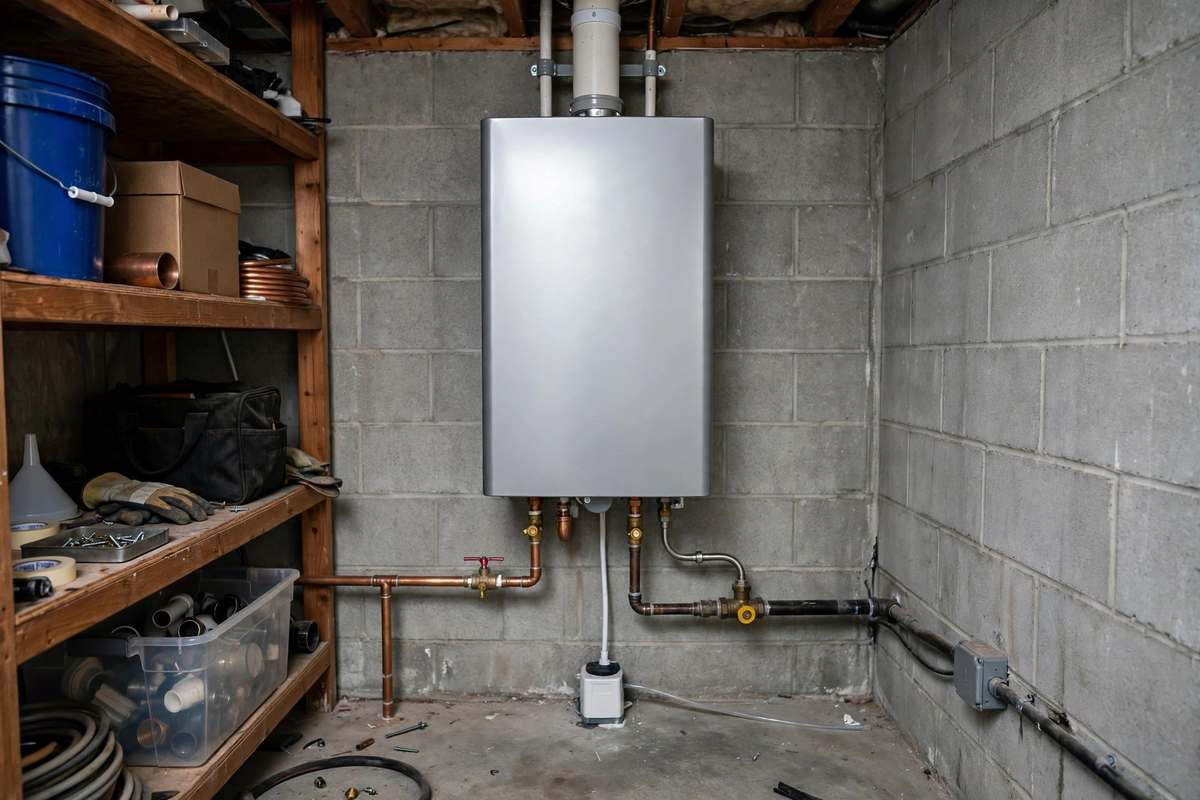
Considering a tankless unit? Call to discuss it
What to do while you plan
Sizing a tankless unit takes a conversation, not a guess: how many showers and fixtures run at once, and how cold the inlet water gets in January. Call (720) 599-7253 and describe the household and the current setup, and we will confirm availability when you call. If the old tank is leaking, shut off the cold-water supply valve above it and, for a gas unit, turn the gas control to off; for an electric unit, switch off the breaker.
What to expect from your tankless water heater installation in Denver
Call and describe the household
Call (720) 599-7253 and tell us how many bathrooms the home has, how hot water is used at once, and what the current setup is. We ask about gas supply and where the unit would mount.
Sizing and selection
We size the unit from simultaneous use and Denver's cold inlet water, assess the gas supply and venting route, and talk through the condensate drain and descaling setup.
Installation and testing
The old tank is removed, the unit is mounted and connected, and we run it at several flow rates to confirm it holds temperature across the fixtures it serves.
What shapes the cost of tankless installation in Denver
A tankless conversion has no published price: the unit, the gas supply and the venting route set the scope. We talk through what the conversion involves before any work starts, and agree the scope with you before any work starts.
Unit size and type
A unit sized for two simultaneous showers is a different job from one sized for a single bath, and condensing units add a condensate drain to the work.
Gas line and venting
A conversion that needs a larger gas line or a new venting route involves more work than one that can use what is already there. The site decides this, not the catalogue.
Site and access
An exterior-wall mount with a short vent run is simpler than a basement install with a long vent and a condensate route through finished space.
Before any work starts
Frequently asked questions
Will a tankless unit keep up in a Denver winter?
It will if it is sized for Denver's cold inlet water, around 43°F in January. A unit sized for a warm-climate inlet will struggle when two fixtures run at once, which is why sizing from simultaneous use matters here.
Does a tankless install need a bigger gas line?
Often, yes. A tankless unit draws more gas than a tank when it fires, so the existing gas line may not be enough. Gas supply is assessed as part of the sizing step, and we confirm at booking whether any gas-line work is within the scope we can take on. We explain what is needed before work is agreed.
How does hard Denver water affect a tankless unit?
Denver Water reports hardness of about 89–105 mg/L (5.2–6.1 gpg), and scale builds up in the heat exchanger over time. The install includes isolation valves so the unit can be descaled, and we talk about a descaling routine at handover.
Do I need a permit for a tankless installation in Denver?
A water heater replacement in Denver needs a permit and inspection, and a tankless conversion is a replacement with gas and venting work attached. We can handle the permit step and arrange the inspection as part of the job — confirm it is included when you book.
Further reading: Tankless vs tank water heaters: cost and efficiency in Denver.
Related services
Water Heater Installation
If a tank is the better fit after all, the tank installation page covers sizing, permits, expansion tanks, and code corrections.
Leak Detection
Where the water comes from decides the fix, so an unexplained leak is traced to the fitting, the line or the unit before anything is opened.
Thinking about tankless in Denver? Call us
Call (720) 599-7253 and tell us how your household uses hot water. We will confirm availability and talk through sizing, gas supply, and venting for your home.