
Leak detection in Denver that finds the source first
Leak detection starts with listening, not demolition. We use acoustic microphones, thermal imaging, and pressure testing to find exactly where water is escaping behind walls, under slabs, or beneath the yard. Call (720) 599-7253 to book an inspection.
Service overview
What leak detection in Denver actually involves
Leak detection in Denver is a diagnostic service that locates hidden water leaks using acoustic listening equipment, thermal imaging cameras, pressure testing, and camera inspection of drain lines. The point is to find the source before anything is opened, so the repair targets the leak and not the room around it. A hidden supply-line leak can run for weeks before it shows, and by then the water has already done its damage.
! Common warning signs
Water bill jumped with no change in use
A water bill that jumps by a fifth or more with no change in use is the clearest sign of a hidden supply-line leak. The water is going somewhere, and the meter is the first witness.
Warm spot on the floor or the sound of running water
Both are classic signs of a leak under a slab. A line running under the basement floor slab or under a slab-on-grade home can leak for weeks before the water finds a visible path.
Damp spot on a wall, ceiling, or baseboard that keeps coming back
Water behind drywall breeds mold within a day or two. A damp spot that dries and returns is a leak, not a spill, and the source is usually feet away from the stain.
Scope of work
What our leak detection service includes
Every leak inspection covers the full diagnostic, the written findings, and a repair recommendation. Repair work is quoted separately and approved before it starts.
-
01
Full system pressure test
We pressurize the supply system and monitor the gauge. If pressure drops, we isolate sections to narrow the leak to a specific run before any wall is opened.
-
02
Acoustic and thermal scan
We walk the affected area with a listening microphone and a thermal imaging camera. Copper and PEX leaks emit a distinct frequency, and leaks under slabs show up as warm streaks on the floor.
-
03
Drain line camera inspection
If the supply side holds pressure, we run a pipe camera through the drain system to look for cracks, root intrusion, or failed joints. A drain leak and a supply leak present differently, and the camera is how we tell them apart.
-
04
Written report and repair quote
Ask us for a written summary with the leak location, pipe material, and a repair recommendation. If you need it for an insurance claim, we send the same findings in writing.
Why Denver homeowners call us first
A hidden leak costs you money every day it runs, and it costs you structure every week it runs. Denver's ground makes the diagnosis harder than it looks: expansive bentonite clay stresses buried copper, and freeze-thaw movement opens joints that only leak when the ground shifts. Finding the source first is what keeps a leak repair small.
Book a leak inspectionTools and methods we use for leak detection
Pipe camera inspection
Pushed through drain lines to find cracks, root intrusion, and failed joints. The camera records video we can share with you, so the diagnosis is visible rather than guessed.
Thermal imaging camera
Detects temperature differences caused by hot water leaks under slabs and behind walls. Warm streaks on the floor are a strong indicator of a leak under the slab.
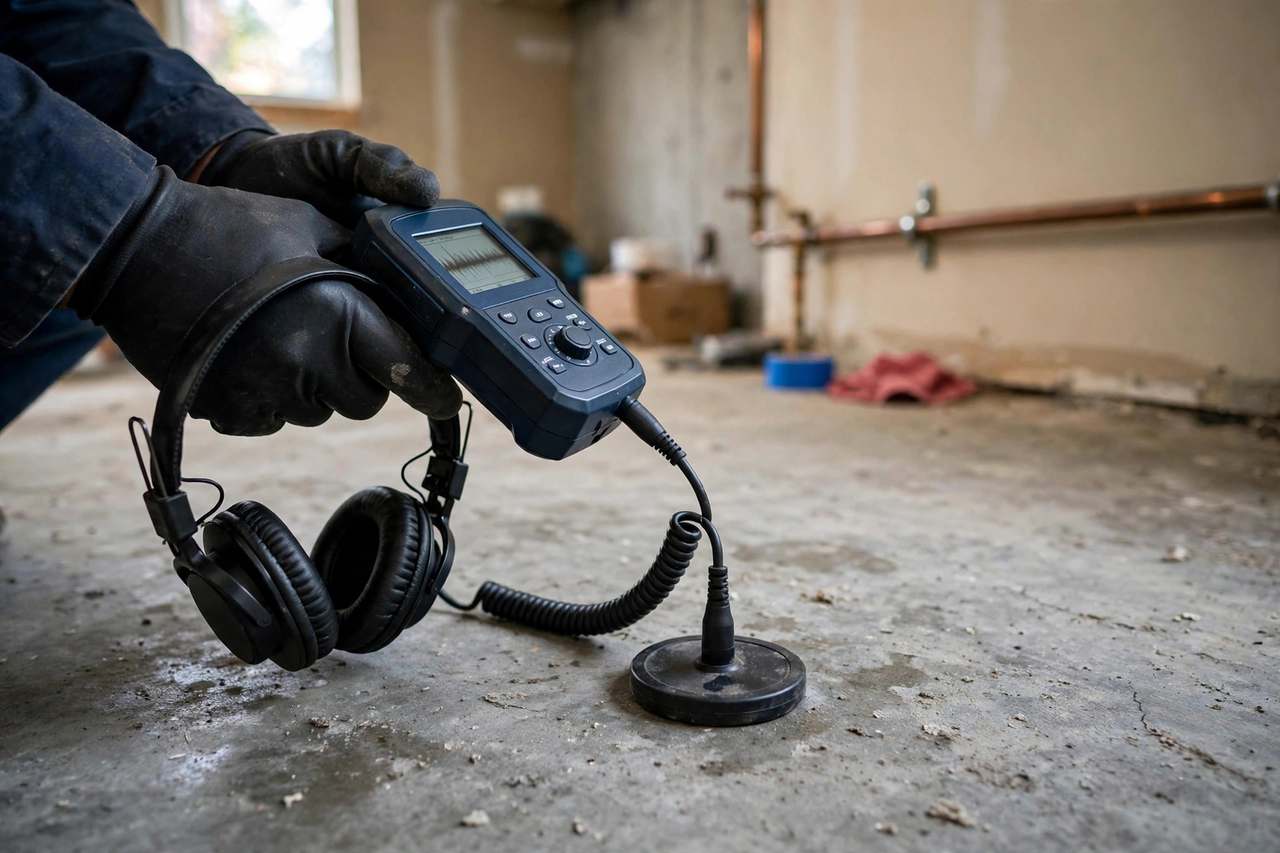
Acoustic listening microphone
Picks up the specific frequency of water escaping a pressurized pipe. We use it to pinpoint leaks before opening anything, so the opening lands on the leak.
Pressure test gauge kit
Pressurizes the supply system and holds it while we watch the gauge. A pressure drop confirms a leak on the pressurized side and helps isolate the section it is in.
Local execution
Denver's freeze-thaw cycle is the single biggest driver of leak calls. When temperatures swing from mild days to single-digit nights in a week, copper and PEX lines in exterior walls, crawlspaces, and garages expand and contract, and the joints are where the movement shows. The city's housing stock adds to it: more than half of Denver homes were built before 1980, and the pre-mid-1990s copper in those homes is reaching the age where pinhole leaks appear in clusters. Basements are the most common foundation type in Denver, so a leak under a basement floor slab is the slab-leak pattern here, not the slab-on-grade pattern of warmer climates. In Harvey Park, Mar Lee, and University Hills, the 1950s ranches sit on clay that swells and shrinks with the seasons, stressing the buried lines. In Capitol Hill and Baker, the leaks hide behind plaster and lathe in walls that have never been opened.
How leak detection runs in Denver
What leak detection usually looks like
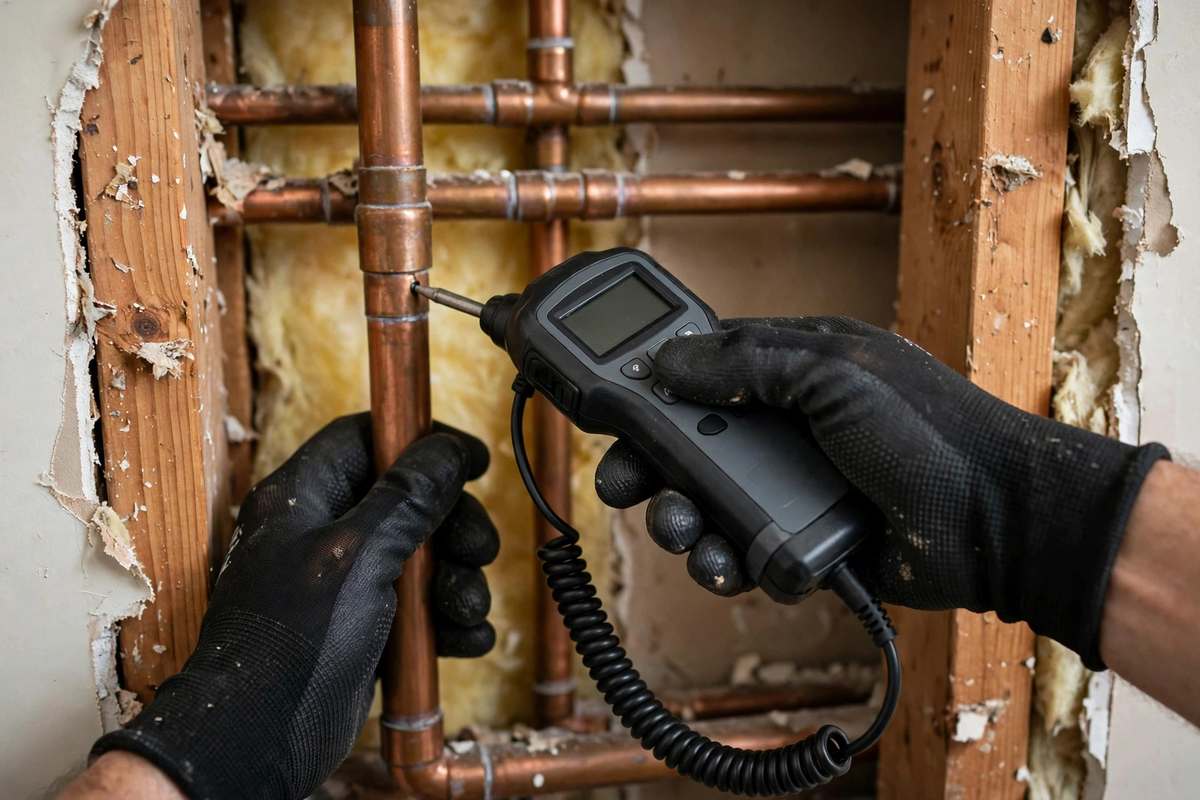
A leak that hides is a leak that grows
Call (720) 599-7253 to book a leak inspection
If your bill jumped, you hear water when every fixture is off, or a damp spot keeps coming back, the next step is a diagnostic visit, not a guess. Call (720) 599-7253 to book an inspection, and we will confirm availability when you call. We test the system, scan the area, and give you a written finding with a repair recommendation before anything is opened.
How our leak detection process works
Phone intake and questions
You call (720) 599-7253 and describe what you are seeing: a high bill, a damp spot, a sound. We ask three or four questions to narrow the likely cause before we arrive.
Full system pressure test
We shut off every fixture and pressurize the supply system, then watch the gauge. A drop tells us the leak is on the pressurized side and helps isolate the section.
Acoustic and thermal scanning
We walk the house with a listening microphone and a thermal camera. Copper and PEX leaks emit a distinct frequency, and leaks under slabs show up as warm streaks. The repair is quoted from the finding, not from a guess.
What affects the cost of leak detection in Denver
The inspection is a diagnostic visit, and the repair is quoted separately once the leak is found. We quote both before work starts. These are the factors that move the inspection cost.
Number of systems tested
A single supply-line test is the simplest inspection. If we also need to test the drain system with a pipe camera and check the water heater, the visit covers more ground and takes longer.
Slab or underground access
Leak detection under a slab or beneath a yard requires thermal imaging and acoustic scanning across a larger area. The scanning is what takes the time, not the opening.
Repair scope after the leak is found
A pinhole leak in an accessible wall is one kind of repair. A leak under a slab that requires opening concrete and rerouting a line is another, and it is quoted on its own once the location is confirmed.
How to reach us
Leak detection questions Denver homeowners ask
How much does leak detection cost in Denver?
The cost depends on how many systems we test and whether the leak is under a slab or underground. A single supply-line test is the simplest inspection; a full diagnostic with camera work covers more ground. We quote the inspection before we start, and the repair is quoted separately once the leak is found.
How do I know if I have a water leak in Denver?
The three clearest signs are a water bill that jumped by a fifth or more, the sound of running water when every fixture is off, and a warm or damp spot on a floor or wall. Any one of them is worth a pressure test.
What is a slab leak in Denver homes?
A slab leak is a failure in a water line running under a concrete slab. In Denver that usually means the basement floor slab, since basements are the most common foundation type here, though it also happens under slab-on-grade homes. Expansive clay stressing buried copper is the usual cause, along with pre-mid-1990s copper reaching the end of its life.
Can leak detection find hidden leaks in Denver?
Yes. Acoustic listening and thermal imaging find leaks behind walls, under slabs, and beneath yards without opening anything first. We pinpoint the location before we open, so the repair targets the leak.
Further reading: Low water pressure in your Denver home: common causes and fixes.
Related services
Emergency Plumbing
When a leak turns into a burst pipe, the job becomes urgent. We shut off the water, stabilize the line, and schedule the repair.
Drain Cleaning
A slow drain and a hidden leak often show up together. After we locate the leak, we clear the line so water moves freely while the repair is planned.
Pipe Repair
Once the leak is located, the repair is a section replacement or a reroute. We cut out the failed section and rebuild it in matched materials.
Suspect a hidden leak? Call (720) 599-7253
Call (720) 599-7253 to book a leak inspection. We will confirm availability when you call, find the source before anything is opened, and quote the repair from the finding.