Pipe repair in Denver for burst lines and hidden leaks
When a pipe lets go, you need the failure found and fixed, not patched over. We handle burst pipe repair, slow leaks behind walls, and aging copper lines in older homes from Capitol Hill to Washington Park. We find the failure, fix it, and pressure-test the line before we leave. Call (720) 599-7253 to book.
Service overview
What pipe repair in Denver really involves
Pipe repair in Denver is the diagnosis and correction of damaged, leaking, or failing water and drain lines inside your home or under your yard. That covers a burst supply line, a pinhole leak in aging copper, a frozen line that split at the thaw, and a drain line cracked by roots. The repair is only as good as the diagnosis: a patch on the wettest spot fails again if the actual failure is a foot away.
! Problems we solve
Frozen pipe that split in an exterior wall
The split releases water as soon as it thaws, often flooding a wall cavity and soaking insulation, drywall, and flooring. The first step is to shut off the main, then call. A split line does not heal, and the water keeps running until the feed is off.
Pinhole leak in aging copper behind a bathroom wall
A pinhole can drip for weeks before you notice. By then the drywall is soft, the framing may be stained, and you are looking at a repair plus a drywall patch. Pinholes in Denver's pre-mid-1990s copper tend to arrive in clusters, which is why we check the whole run, not just the drip.
Tree roots cracking the sewer lateral under the front yard
Roots enter at joint seams and slowly block the line. You get repeated backups, slow drains, and eventually sewage in the basement. The longer it goes, the more the line degrades, and the repair grows from a section replacement into a full run.
Scope of work
What is included in our pipe repair service
Every pipe repair job includes the diagnosis, the repair itself, and the testing to prove it holds. Here is what you get as standard, and what we handle as a separate quote if the camera shows a bigger problem.
-
01
Full diagnosis and leak location
We use leak detection equipment and a pipe camera inspection to find the exact failure point before we open anything. You get a plain-English explanation of what failed and why.
-
02
Repair with matched materials
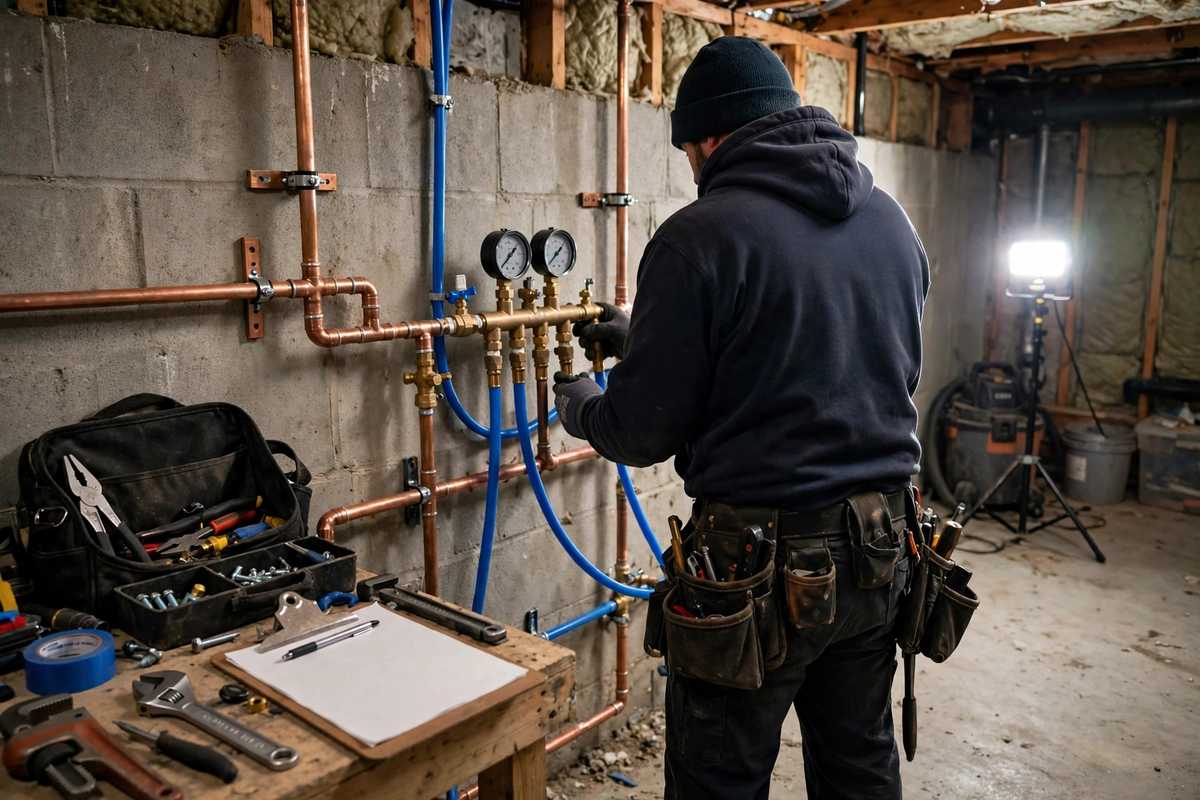
We cut out the damaged section and rebuild it in copper pipe, PEX tubing, PVC pipe, or ABS pipe to match what is already in your home. Joints are soldered or crimped to code, and new shut-off valves go in where the old ones have seized.
-
03
Pressure test and verification
After the repair, we restore water and pressure-test the line. Every joint gets checked with a dry rag and a flashlight. If anything weeps, we fix it before we call the job done.
-
04
Cleanup and written summary
We haul out the old pipe, wipe down the work area, and leave your home as clean as we found it. Ask us for a written summary of what failed, what we replaced, and what to watch for next.
Why homeowners call us for pipe repair
A failed pipe is a race against water damage. The sooner the line is isolated and repaired, the less drywall, flooring, and framing you lose. But speed without diagnosis is how a home ends up with three patches on one failing run. We find the failure first, fix it once, and test it before we leave.
Book a pipe repair visitTools and methods we use
Pipe camera inspection
Lets us see inside drain and sewer lines to confirm cracks, root intrusion, and buildup before we cut anything. We show you the footage so you can see the failure for yourself.
Leak detection equipment
Acoustic listening and thermal imaging narrow a hidden leak down before anything is opened. That is how we avoid exploratory demolition on leaks under slabs and behind walls.
Soldering torch and PEX crimping tool
The soldering torch makes code-compliant copper joints, and the PEX crimping tool makes secure PEX connections. We carry both so we can match whatever material is already in the walls.
Hydro jetting machine and drain snake
When a drain line is blocked by grease, scale, or roots, the snake clears the easy blockages and the hydro jetting machine scours the pipe walls clean.
Local execution
Denver's climate and housing stock shape every pipe repair job we do. Winter temperatures drop below 20 degrees regularly, and the freeze-thaw cycles push water pipes in exterior walls and crawlspaces below freezing, then thaw them again. The first freeze usually arrives in early October and the last in early May, so the season is long. In Capitol Hill, Baker, and Five Points, the pipe is galvanized steel and copper laid before 1950, and the failures are pinholes and split joints. In Park Hill and Washington Park, the same era of pipe runs under longer front yards. In Harvey Park, Mar Lee, and University Hills, the 1950s ranches are hitting the age where copper pinholes arrive in clusters and the lines under basement slabs are stressed by bentonite clay that swells and shrinks with the seasons.
How pipe repair runs in Denver
What pipe repair usually looks like
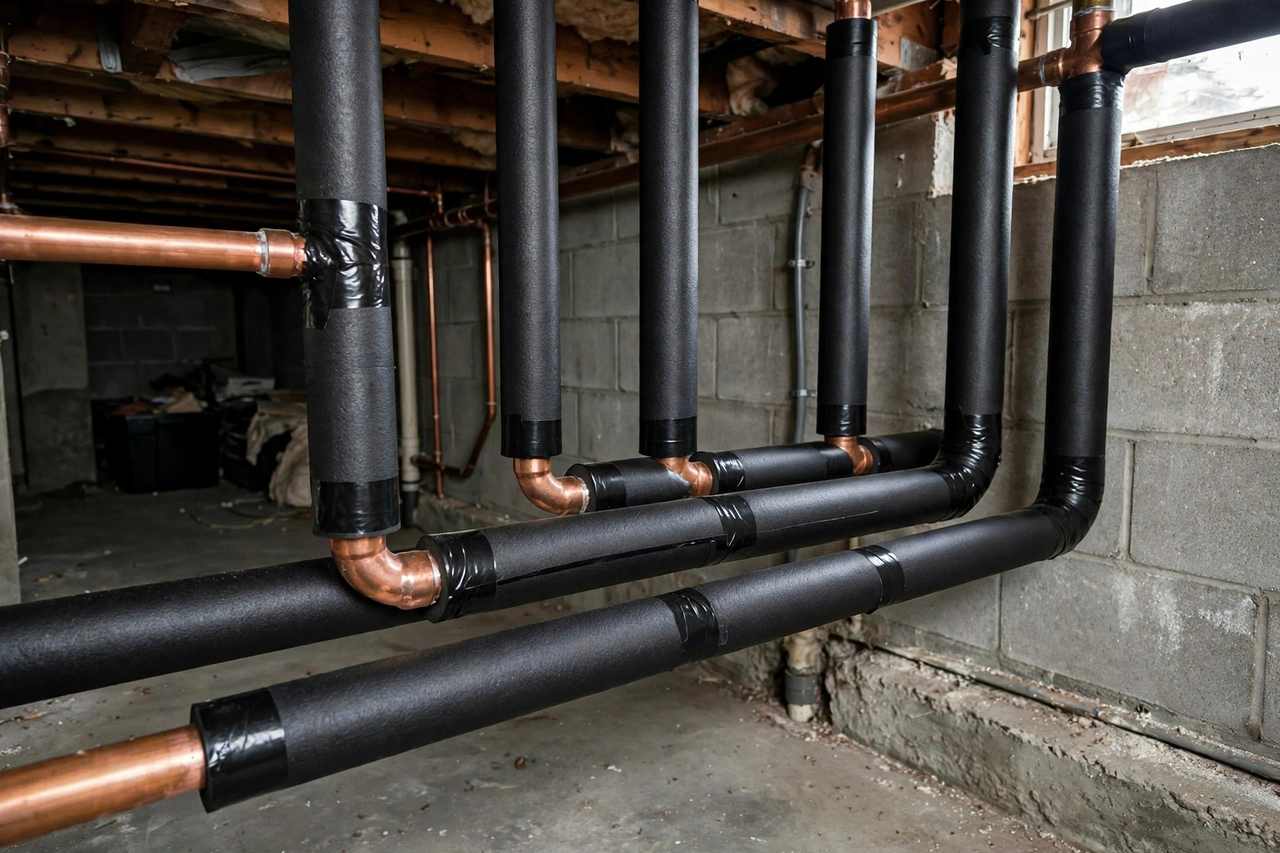
A pipe that fails once will fail again unless the cause is fixed
Call (720) 599-7253 to book a pipe repair visit
Pipes do not burst on a schedule, and a patch on the wettest spot is not a repair. Call (720) 599-7253 to book a visit, and we will confirm availability when you call. We diagnose the failure, repair it with materials matched to the home, and pressure-test the line before we leave, so the same run does not fail again next month.
How our pipe repair process works
Call and triage
You reach us at (720) 599-7253. We ask where the water is, whether it is still running, and whether you have shut off the main. If you have not, we walk you to the shutoff first.
On-site diagnosis
We confirm the failure with a camera or leak detection equipment, and show you what we found. The repair is quoted before work starts, and if the run is failing in several places, we lay out the repair-versus-replacement choice.
Repair and test
We cut out the damaged section and rebuild it. After the repair we pressure-test the line, check every joint, and can leave you a written summary of what was replaced.
What affects the cost of pipe repair in Denver
We quote the repair before we start, so you know the number before any wall opens. These are the factors that move it.
Access to the failed section
An exposed joint in a basement or crawlspace is the simplest repair. The same joint behind finished drywall, under a slab, or buried in the yard adds time, equipment, and restoration.
Pipe material and size
Copper pipe costs more in material than PEX tubing, and larger-diameter lines use more of it. If your home has mixed materials, we may need transition fittings to join the old run to the new section.
How much of the run is failing
A single failed joint is one kind of job. A run that has failed in three places is a replacement decision, not three patches, and it is quoted as a run rather than as three separate repairs.
How to reach us
Pipe repair questions, answered
How much does pipe repair cost in Denver?
The cost depends on access, pipe material, and how much of the run is failing. An exposed joint is the simplest repair; the same failure behind finished drywall or under a slab takes longer and costs more. We quote the repair before we start.
What causes pipes to burst in Denver?
Freezing is the number one cause here. Denver's freeze-thaw cycles push water pipes in exterior walls and crawlspaces below freezing, and the ice expands until the pipe splits. The split often shows only at thaw, when water pressure returns.
Can I repair a leaking pipe myself in Denver?
For a slow drip on an exposed joint, a compression fitting can buy you a few days. But anything behind drywall, under a slab, or on a pressurized supply line needs a proper repair with matched materials and a pressure test, and a failed DIY repair on a supply line can flood a wall in minutes.
How long does pipe repair take in Denver?
A simple exposed joint takes an hour or two. A wall-access repair runs longer once we open and patch. Leaks under slabs and underground pipe repairs take the longest, because the access itself is the work.
Further reading: Emergency plumbing in Denver: what to do when a pipe bursts.
Related services
Emergency Plumbing
A burst pipe running water is urgent work: the water is shut off, the failure isolated, and the line repaired before the house floods.
Drain Cleaning
A slow drain often points to buildup or root intrusion in the line, not a broken pipe. We clear it, then camera the line to confirm whether the pipe itself is sound.
Frozen Pipe Repair
A frozen line that has split needs thawing, repair, and prevention. We find the freeze point, replace the split section, and talk through insulation and shutoff for the next cold snap.
Pipe leaking? Call (720) 599-7253
Call (720) 599-7253 to book a pipe repair visit. We will confirm availability when you call, find the failure before we open anything, and quote the repair before work starts.