
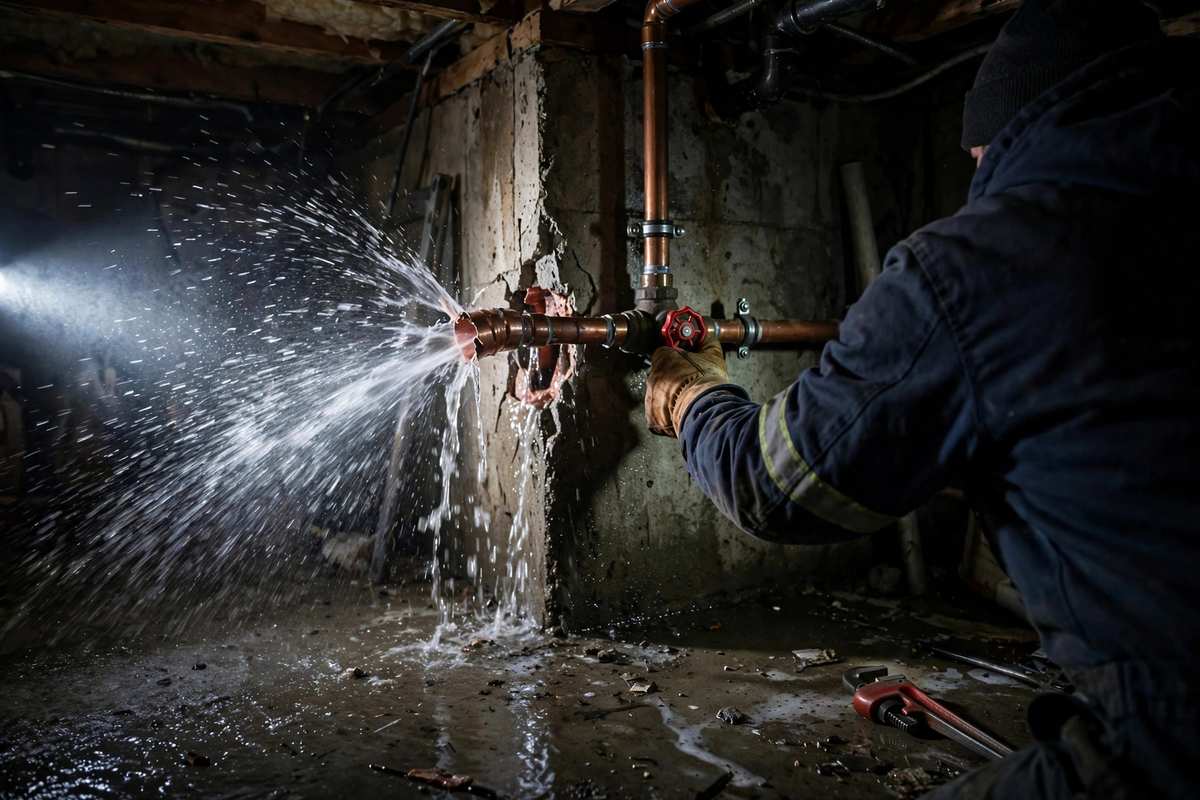
A burst pipe in Denver is usually a freeze story, not a wear story. Front Range weather can swing from a warm day to a single-digit night, and the split often only shows at thaw, feet from the ice plug. What you do in the first minutes matters more than anything a plumber does later.
First: shut off the water
Find the main shutoff before you need it. In most Denver homes it is in the basement near where the service enters, on the street-facing wall. Turn it off. A burst half-inch supply line can put several hundred gallons an hour into a wall cavity, and it releases water continuously until the main is shut off. The damage is far less if the water is off in two minutes rather than twenty.
Second: protect people and property
Do not touch water near electrical outlets, panels or appliances. If water is near electrics, leave the area and call for help. Move valuables, rugs and furniture out of the water's path. Open a faucet at the lowest level to drain standing water from the pipes, and open cabinet doors under sinks so warm air can reach the pipes.
Third: call a plumber
Call (720) 599-7253 and describe what happened: where the water is, whether the main is off, and how old the house is. We will confirm what we can do and arrange a visit. Do not wait for the pipe to thaw on its own if water is still running.
Why Denver pipes burst
Where pipes freeze first
Pipes freeze first in crawlspaces, attics, garages, exterior walls and rim joists, and in hose bibs left connected over winter. Sources consistently put exposed or poorly insulated lines at risk below about 20°F. Denver averages about 156 nights a year at or below freezing, with January lows around 18°F, and the freeze season runs from early October to early May. The vulnerable spots are the same ones a frozen pipe repair addresses: exterior walls, crawlspaces, garages, hose bibs and rim joists.
What a plumber does after a burst
Replace the burst section, then check the run
The burst section is cut out and replaced, and the rest of the run is checked for other freeze damage, because a single cold snap can split more than one place. Insulation, heat tape and hose-bib shutoff are the prevention steps for the next cold snap. See our guide on how to prevent frozen pipes in Denver this winter, and our leak detection page if water is appearing with no visible burst.
Sewer backup and no hot water
A burst pipe is not the only cold-weather emergency. A sewer backup into a basement floor drain and a water heater that quits in January are the other two. For a backup, stop running water and call. For no hot water, check whether the heater has power or gas and whether the pilot is lit, then call and describe what you found. See emergency plumbing for the full list.